I'm truly humble by these words from my pastor! To God be the Glory!
Wednesday, April 19, 2023

Tuesday, November 15, 2022
What if....Rap had given proper credit
It's 1993. Hip Hop is huge. I'm loving it. I know I want to be a producer and as I'm loving hip-hop, I am simultaneously falling in love with jazz (thanks to Benjamin Pruitt!) I get this idea to put jazz with funky beats. No one is feeling me, although my friends love Gangstarr, who has done it already.
There is a problem. I don't have any money to get equipment. Oh well, I'm going to try. Then as I have my portable FM radio on me riding the Dexter Bus to Northland Mall, I hear this song come on FM98 in Detroit. I hear this bass player walking a bass line. NICE!!!! Who is this playing? Then the drums come in NICE!!! Then I hear these horns. YES. I'm like what am I listening to that is that is sooo smooth. Then the chorus.
I'm so sold.
Rebirth of the Slick: Cool like that
Composed by Ishmael "Butterfly" Butler, Mariana "Ladybug Mecca" Vieira, and Craig "Doodlebug" Irving. James Williams.
Personnel:
Ishmael "Butterfly" Butler: vocals
Mary Ann "Ladybug Mecca" Vieira: vocals
Craig "Doodlebug" Irving: vocals
Art Blakey - drums
Valery Ponomarev - trumpet
Bobby Watson - alto saxophone
David Schnitter - tenor saxophone
James Williams - piano
Dennis Irwin - bass
Sean "Puffy" Combs: vocals
Christopher Wallace aka Notorious BIG: vocals
The song? Rebirth of the Slick: Cool like that by Digable Planets. THIS IS A HIT! I also thought, "This was the music I want to write! I told y'all you could do music like this live!"
Once again the chorus
I see my good friend Kindra Parker who is equally a hip-hop head like me. I say to her, Did you hear that song on FM98?
She starts singing.
I'm cool like dat, I'm cool like dat
I'm cool like dat, I'm cool
I'm cool like dat, I'm cool
I jump in too. This is awesome.
I go back on the bus later to Northland and go to Musicland, one of the best record stores later rebranded as Sam Goody. I can't wait to find it.
Now, I learned how to red from two items: architectural digest and record covers. I always read the album credits. I wanted to know who was on every person who created the masterpiece I was listening to.
When you have the single "Rebirth of the Slick: Cool like that), you see this in the credits:
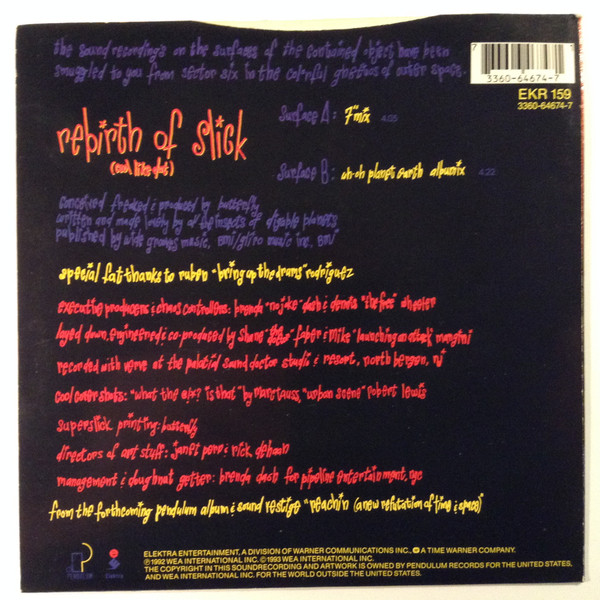
So at this point, I'm thinking they had some live bodies in the studio. Why? Well, that's how I made music at the time. So I thought everyone did that.
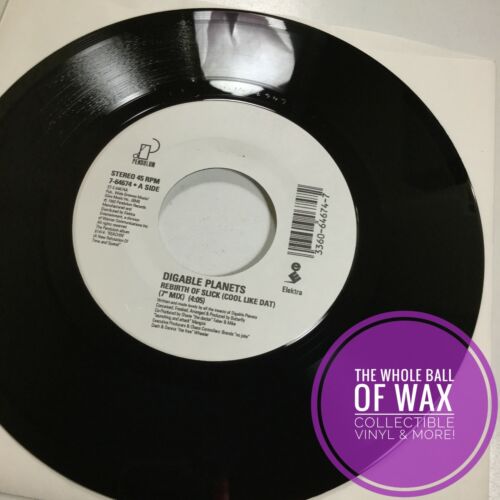
Rebirth of the Slick: Cool like that is an amazing composition and recording. It deserves everything it has earned. It still resonates with my generation. Right is right and wrong is wrong however. THIS was the original point of James Mtume criticizing sampling. Have integrity. PAY the people of the music you sampled. Now, perhaps they did pay James Williams. I don't know. Mr. Williams has passed on. When I talked to Mr. Watson, he said he was unsure. What is crazy is as big as that song is, NO ONE KNOWS WHO PLAYED THE HORNS ON THAT! The composer of the sampled song and the band needs their due. Musical Integrity needs to prevail. Pendulum and Elektra Records should have known better. For that matter, ALL of the uncredited sampled song need their due. But for now, let's fix the aforementioned problem. Give these people their Grammy. If they hadn't made the song, there is no "COOL LIKE THAT!" Let the credits from this point read:
Conceived, freaked, and produced by Butterfly
Written and made lovely by all of the insects of digable planets.
So at this point, I'm thinking they had some live bodies in the studio. Why? Well, that's how I made music at the time. So I thought everyone did that.
Then later I found out the truth: they SAMPLED.
What if you bought the single or full album and it said this instead. Nope.
Even on the vinyl, there is no mention of the sample origins.
I had no idea that it was a sample and it's wrong that the composer didn't get his credit. Mind you, I'm 15 years old at this time. I'm still trying to understand what sampling was. Being a young classical and jazz musician, this idea of sampling was foreign to me. What about the musicians? They are the ones that made the music? Now, this isn't to cast aspersion on Digable Planets. They are wonderful and I still bump their music regularly. AND, this problem isn't on them, it's on the label and producers (Pendelum and Elektra.) Then around 1995, I had learned that many (which is an understatement) songs hadn't been cleared.
Just for clarity, sampling is when you take an a portion of the actual source of a recording (whether analog or digital) and use it in a project. It is different from recreation or interpolating, which is when you literally perform another's person creation or sing/play a portion of a song respectively.
This came to a head about three times when the great James Mtume had some interesting words about sampling. If you don't know who Mtume is, let's just say he has had arguably four great careers in music. We can start that he was a percussionist with Miles Davis. That automatically makes him a legend.
The his own band, Mtume, had hits. Yeah, that song Juicy Fruit, that's him.
Third, we can take about as a songwriter and producer for other people. How about "The Closer I get to You" or "You know how to Love Me." He also scored "New York Undercover." The fourth career is how coincidently about how his music has been a lifeblood for hip-hop.
So Mtume lambasted producers on a radio show "Open Lines" for being lazy which garnered a nice attack by rap group Stetsasonic called Talking All that Jazz. Now what is interesting about this: They MISSED Mtume's main point was to give PROPER credit to the people sampled and PAY the people who's music which conveniently gets lost in the sauce.
So now, what if....a big what if......
What if Rap had given proper credit when they originally started sampling. What I mean by "proper" is that they gave credit to Everyone. What if they adequately and accurately cited the songwriters and musicians? I dare say, we would look at the music differently. WAAAAAYYYYYY differently. We would recognize the performers of the sampled and they would get their due! Mtume has said MANY composers did not get paid and lost out on millions of dollars.
Then the question must be asked: How did the unjust due start? Well, that is a looooong conversation. I think a better way to have this conversation is to look at Rap/Hip-Hops fun history. See, rap started off in its early form by DJs.....well ,ONE Dj (Kool Herc) prolonging jams by buying two of the same albums and playing the breaks, going back and forth to keep the party going. This technique kept going and eventually, people started to rap over these extended breaks. These breaks were usually found on the 12" versions of singles. Now people started looping these breaks and rapping over them. Thus is born Rap Music.
With this type of simple beginnings, it became easily approachable.
So as people started recording over these loops and breaks, no one thought over the legal repercussions. An essential loophole (or so they thought) was how sampling was not included in the copyright language of the time especially with digital recreation. Remember, just like Apple's Garageband can have the average joe make a song, these were just regular people having fun and saying stories/poetry over prerecorded grooves. All you needed was a turntable and a mic.
So did the authors of the music own the rights when someone put the actual recording in their music? Oliver Wang wrote beautifully on this matter:
When sampling technology and practices became hip-hop's musical blueprint in the late 1980s, the business and legal rules were a thoroughly gray area. Since the techniques created digital copies of source material, copyright holders could argue that unauthorized sampling violated their intellectual property. Those doing the sampling could argue they were repurposing fragments of recorded music to create something entirely new. Up until 1991, disputes around whose argument carried more weight tended to be settled outside of court.
Per usual. technology comes faster than the law. Similar thing happened when VHS came out. Movie companies at first blocked it. Now movies like Frozen and Avatar have sold over 7 million DVDs and BluRay. Let's just say the companies have changed their mind! So now the court has to determine this gray area about sampling. Oops.
Now back to Cool Like That. There is another problem.
THIS SONG WON A GRAMMY!!
And it should have. YES, the song is amazing, It is a Classic.
This isn't an attack on rap, DP, or even sampling itself.
HOWEVER, when a song wins a Grammy, the musicians on that song get it. Wait a minute, the musicians from the sample should get it too!!! And the person who wrote the sampled song didn't even get credit.
So what is the song? Stretching which was composed by James Williams on the 1978 album Reflections in Blue by Art Blakley. It's a fiery song in Bminor that is in Blues form, but doesn't quite follow traditional blues progressions. Featured on this song is Bobby Watson, someone I came to know while I lived in Kansas as he is the former chair of Jazz Studies at the University of Missouri Kansas City,
Rebirth of the Slick: Cool like that
Composed by Ishmael "Butterfly" Butler, Mariana "Ladybug Mecca" Vieira, and Craig "Doodlebug" Irving. James Williams.
Personnel:
Ishmael "Butterfly" Butler: vocals
Mary Ann "Ladybug Mecca" Vieira: vocals
Craig "Doodlebug" Irving: vocals
Art Blakey - drums
Valery Ponomarev - trumpet
Bobby Watson - alto saxophone
David Schnitter - tenor saxophone
James Williams - piano
Dennis Irwin - bass
Now we see the full music greatness of this composition. We see LIFE. We can read about the great musicians who are on this song!
Just for the fun of it. How about we take a few other song and give proper credits/citations of AL the players. These songs were CLEARED FYI: however, I just want to show you the musical depthness of these songs if they were to list all of the performers and include the songwriters.
Young G's
Combs, Shawn Carter, Christopher Wallace, Burton Smith, Oliver Sain, Donny Hathaway)Sean "Puffy" Combs: vocals
Christopher Wallace aka Notorious BIG: vocals
Jay-Z: vocals
Kelly Price: vocals
Oliver Sain - vibraphone
Earl Wright - Guitar
Paul Jackson - bass
Sammy Harris: Drums
Paul Jackson - bass
Sammy Harris: Drums
Burton Rashad Smith: Drum Programming and keyboards
**
One Love
(Leon Ware / Etterlene Jordan / Arthur Ross / Maxwell Dixon / Anthony Martin / Eldra De Barge / William De Barge, Don Addrisi)
**
One Love
(Nasir Jones, Johnathan Davis, Jimmy Heath)
Nasir Jones: vocals
Nasir Jones: vocals
Stanley Cowell - Kalimba
Percy Heath - Bass
Albert Heath - Drums
Tiki Fulwood: Drums
Q-Tip: Background vocals and Drum Programming
**
Steady Mobbin
Steady Mobbin
(O. Jackson, A. Gorrie, M. Gaye, Leon Ware, George Clinton, B Nelson, R. Ford)
Ice Cube: Vocals
Debbie Wright, Jeanette Washington, Lynn Mabry, Dawn Silva, Cordell Mosson, Mallia Franklin: Background Vocals
Hamish Stuart – guitar
Onnie McIntyre – guitars
Roger Ball – piano
Onnie McIntyre – guitars
Roger Ball – piano
Alan Gorrie – Bass
Chuck Rainey: Bass
Robbie McIntosh – drums, percussion
Bobbye Hall Porter, Eddie “Bongo” Brown – bongos, congas
James Gadson – drums
Robbie McIntosh – drums, percussion
Bobbye Hall Porter, Eddie “Bongo” Brown – bongos, congas
James Gadson – drums
****
I Like It (I wanna Be Where You Are)
(Leon Ware / Etterlene Jordan / Arthur Ross / Maxwell Dixon / Anthony Martin / Eldra De Barge / William De Barge, Don Addrisi)
Grand Puba: Vocals
Bunny DeBarge, El DeBarge, Randy DeBarge, Mark DeBarge and James DeBarge: Background Vocals
Raymond A. Crossley, Russell Ferrante: piano, keyboardsRoger Ball – piano
Chuck Rainey: Bass
Robbie McIntosh – drums, percussion
Carl Tjader –vibes
James Gadson – drums
Robbie McIntosh – drums, percussion
Carl Tjader –vibes
James Gadson – drums
Mark Sparks: Drum Programming
Conclusion
With this type of credit listing, the argument of Hip-Hop not being music is absurd. People are being recognized and knowledge is being passed. Granted, Hip-Hop shot itself in the foot by not doing this first.
This would be amazing, This looks amazing. Let's make it right! We can see the artistic merit in these productions. If we can rename schools that once bore the names of crazy people, we can give the sampled performers their Grammy easily.
Saturday, May 14, 2022
I need to finish:
Amen, finished my 3rd and 4th cello suite. BOUT TIME CHAD!!!
Now, I need to finish:
- Alma Mater (choir and Piano)
- Percussion Concerto
- 18th and Vine (orchestra)
- Benjamin and Caroline (big band)
- Baking Scene (Big band)
- Rewrite a few bars of Indigo Child Opening Credits.
Monday, March 21, 2022
Living Composers
Some awesome pieces from living composers!!!!!!!1
Kevin Day
https://www.youtube.com/watch?v=O9b4XuVoM5A
William AR May
https://www.youtube.com/watch?v=d3Dm3O293Bk
Brooke Pierson
https://www.youtube.com/watch?v=MSVJHjHXWoA
Armando Bayolo
http://armandobayolo.com/project/cancionero-amoroso/
James Lee II
https://www.youtube.com/watch?v=_-6c19W67ZU
Tuesday, April 27, 2021
What goes around, comes around
Back in the 48109, One of my composition teachers sat me down and opened up a great score. He saw what I was doing (which was terrible) and he showed me what this MAGNIFICENT composer had done. Few weeks later, I told one of my teachers about that score. He subsequently gave me that score. The composition was Beethoven 7th, the teacher in that lesson was Erik Santos and the buyer of the score was James Aikman. 23 years later, I gave that EXACT same lesson Santos gave me with score Aikman bought me to my orchestration class at Morehouse College. Thank you Father for Santos, Aikman, and Beethoven being in my life! You all have been such a HUGE blessing in my life. Oh, and GOBLUE!


Wednesday, February 24, 2021
I Wonder Why I Love Music so much?
I Wonder
I Wonder Why do I love Music so much?
Is it because in Concert Band I played Gustav Holst, Granger, Vaughn Williams. Then you add Elgar, Sullivan, and Britten. Does this give me a undying love of British Music and its composers?
I wonder
Is it because first and foremost, my father and his sister played the music of Quincy Jones, Michael Jackson, Stevie Wonder, Motown, and many others over, over and over?
Or is it because when I attended Birney Elementary School, in Detroit, MI, my music and art teacher Lawrence Cotter introduced me to a plethora of composers like Leroy Anderson, Mozart, and Beethoven?
Is it because I was inspired by the pen of Dick van dePitte and Paul Riser and power of the DSO?
Is it because Howard House taught me trumpet and euphonium at that same elementary school, supplemented by seeing Wynton Marsalis playing a piece about a carnival on that instrument?
Or is it because when I heard Daisy Gaines play organ at Christ Reformed Baptist Church, I wanted to play like her?
I wonder? I wonder...
Is it because in Concert Band I played Gustav Holst, Granger, Vaughn Williams. Then you add Elgar, Sullivan, and Britten. Does this give me a undying love of British Music and its composers?
Is it because in opera, you learn about Verdi, Leoncavallo, and Puccini. Does this give us a undying love of Italian Music and its composers? Does it not want to make you go to La Scala?
Is it because in all facets of music, you learn about Rimsky-Korsakov, Tchaikovsky, and Mussorgsky. Does this give us a undying love of Russian Music and its composers? Does it not make you want to go to St. Petersburg?
Is it because in jazz, you learn about Armstrong, Bechet, and Marsalis. Does this give us a undying love of New Orleans Music and its composers? Does it not make you want to go to Bourbon St?
I wonder, I really wonder...
This really has me deep in thought.
Is it because Mendelssohn make you want to know what was he dreaming that Midsummer Night? Or what was in Fingel's Cave?
Is it because I wanted to cower and not go after my dreams, but Bird and Diz said "Now's the Time?"
Is it because Spyra Gyra and Al Jarreau had me dancing in the morning?
Is it because Ms. Rushen remind me not to forget her as I heard her sing and play?
Is it because a trio took a soulful strut down Brunswick trying not to be wack?
Is it because it felt so good to ask Mister Magic about street life during Mardi Gras with Angela looking alot like Naima in a Taxi?
Is it because Sonny Rollins give me interest to travel to Nigeria while Weather Report told me about Birdland?
Is it because DouDou Ndaiye Roae make me want to learn Djembe or breeze on a masquerade like a guitar player?
I wonder, I really do wonder.
Is it because Ellington made me want to Take the A-Train or Basie having me jump when it's One O'Clock?
Is it because Dr. Hailstork reminded me, "I made my vow?"
Is it because Beethoven had me ask my mother, "Who was Elise?" or Smetena wanting me to take a boat down the Moldau?
Is it because I heard Rostropovich play Bach's Cello Suites so flowingly or Andre Watts tickling the ivories?
Is it because Marvin asked what was going on? and I answered, "My pain and headache follows me everywhere I go?"
I really have to ask these questions.
Is it because Mr. Morris told his dear love "You are the sunshine of my life"
Is it because I didn't go to Clarksville; I decided to take that late night train to Georgia?
Is it because Benny Goodman had me ask "Where was the Savoy" or Duke Pearson and Eddie Jefferson had me ask "When was the last time I saw Jeannine?"
Is it because I was busted and I wasted time at the Bay thinking about how funky of a drummer I could be if I believed?
Is it because I whispered in her ear tenderly, "You're my shining star, always and forever, please don't go way from me?" or is it because I walked on by to Cafe Reggio?
I wonder this at times.
Is it because I love the fountains and pines of Rome or want to ride a funiculi?
Is it because no one must sleep until I find Daphnis and Chloe?
Is it because I found out why Joe was so killing or me trying to keep Freddie from Freeloading?
Is it because the big Delight had MJ, Diana, Nipsey, and Ted going down the road with ease to see Mr. Pryor or was it because his God-daughter was singing and putting her arms around James?
Is it because I'm running for no reason and I can't hide love from her, who shines like a sun goddess?
It goes through my mind often.
Is it because Ella's words killed me softly as I never could say goodbye to Lady Luck?
Or is it because when I was in Madrid, I danced cheek to cheek with Ilene night and day?
Is it because I want to be the Chairman of the Board driving down Route 66 teaching the boy from New York City how to make money?
Is it because I graduated from College although I registered late every semester
or was it because I was always faithfully reading the Washington Post come Sunday.
Is it because I'm on the hill, not just blueberry or sugar, relaxing electrically because my account is paper thin?
Is it because I don't believe He brought me this far giving me melodies from Heaven saying how wondrous is His Name
Or is it because I had an inner urge to play dominoes and celebrate being Black & proud?
The question is, "Why do I love Music so much?"
I Wonder, I wonder,
I wonder
© MMXXI Chad E. Hughes
Sunday, February 21, 2021
Virtual Performance Video: How Long does it take?
Many people have asked how long does it take from "start to finish" to make a virtual performance video. I have to give you an almost full-unabridged explanation so you can understand what needs to be done. It's not to scare you, but this is not a one-stop shop or an overnight feat! If someone asks you for one overnight, please allow them to read this. This is my response to a letter someone sent asking me," How long does it take?"
1.) Pre-Production: First, I had to make the click track. This was done by arranging the music of both Lift Every Voice and Sing and Star Spangled Banner and exporting the music notation file to audio. The average arrangement may take 8 - 10 hours. Even with my Synesthesia (I see color as I hear the music, which tells me the chord structure of the music as soon as I hear it.) Some may say it is absolute pitch, but I don't hear the music "stacked," I see the overall sound structure. So, as far as these arrangements were concerned and because the chords are already in my head, the songs took me 4 hours. It's not just about placing notes, it's about voicings and setting the music to perfectly fit your ensemble. With me having a smaller ensemble, voicing can be complicated.
In other words, one has to get an arranger to make sure they can play whatever is they need to do, or have a sound engineer that can
Total Hours Pre-Production: 4 hours
2.) Editing & Mixing. This is where a bulk of my time is done. One could have crappy video, but EVERYONE expects great audio quality. What Digital Audio Workstation (DAW) do you have: ProTools or Logic? With your size band, GarageBand isn't going to cut it.
So to begin, you can't just take everyone's audio and just drop it. You'll have to align everyone's audio after you set up your template in your DAW. That comes to about a minute per track. Imagine if you were to have sixty people in your group! Some students had stereo tracks, some had mono. You'll have to decide how you'll want to do that.
About the audio: some sent 24:44 resolution, some sent 24:48, some 16:44. That's technical jargon on how the music was recorded and how the computer will read it. It's kind of like old VHS recorders at SLP, LP, and EP. I even had a kid send an 8-bit recording which is the resolution of the first Nintendo Entertainment System. Translation: All files need to be the same resolution, or you can't play or edit them all together. If you are curious on what those numbers mean, here's a good link for that: https://www.technics.com/us/high-res-audio/what-is-high-resolution-audio.html. I strongly recommend recording at 24:48.
High-Resolution Audio (HRA) is any format beyond the 16-bit/44.1kHz CD standard, and HRA recordings normally use 24-bit encoding, allowing a much wider dynamic range than CD, and sampling rates all the way up to 192kHz, which is the current state of the art for commercial HRA recordings. www.technics.com |
You have to allow time for the computer to convert all of those files to the same resolution. Some of the students sent files that didn't work so I had to wait on them to resend the audio. You also have to factor in time if the students don't know how to send separate audio and video files. MOST don't know how. Even fellow teachers don't know how. That can be about an hour for every thirty people. This is just PREPARATION to edit.
With all of that, now you must make it sound like a band. With thirty tracks, I had my time cut out for me.
Lower instruments take up more sonic room. What does that mean?
Picture the offensive linemen of your favorite football team. Now imagine them sitting on a bus. They aren't sitting two in a seat. If they do, it's uncomfortable for them. So with bass frequencies, you must let them breathe. Your bass guitar, string bass, tuba, bass drum, sometimes your trombones/euphoniums, violoncellos, and low range of piano are all fighting to get through the same door. When mixing, the engineer is trying to find a place to sit for all those low frequencies comfortably. This is a task. Do you want more tuba or more bass drum? There's not a right or wrong answer; however, it's a constant fight in your mix especially given the range of the tuba and bass guitar. You may have to automate who comes out more. This itself is a 1-3 hour process by itself sometimes. In gospel music, R&B, and house (where bass is more expected), it will definitely take more than an hour.
Now that we have the low-end done, I'm trying to make the rest of the band sound good. You have to align eighth notes/sixteenth notes which can be tedious.
Prayerfully, everyone plays the right articulation. I haven't even talked about intonation. We haven't been in the band room in almost a year so it's hard to expect them to remember pitch tendencies. Decent tuning programs cost about $349 but you really need the mid-level option: https://shop.celemony.com/cgi-bin/WebObjects/CelemonyShop
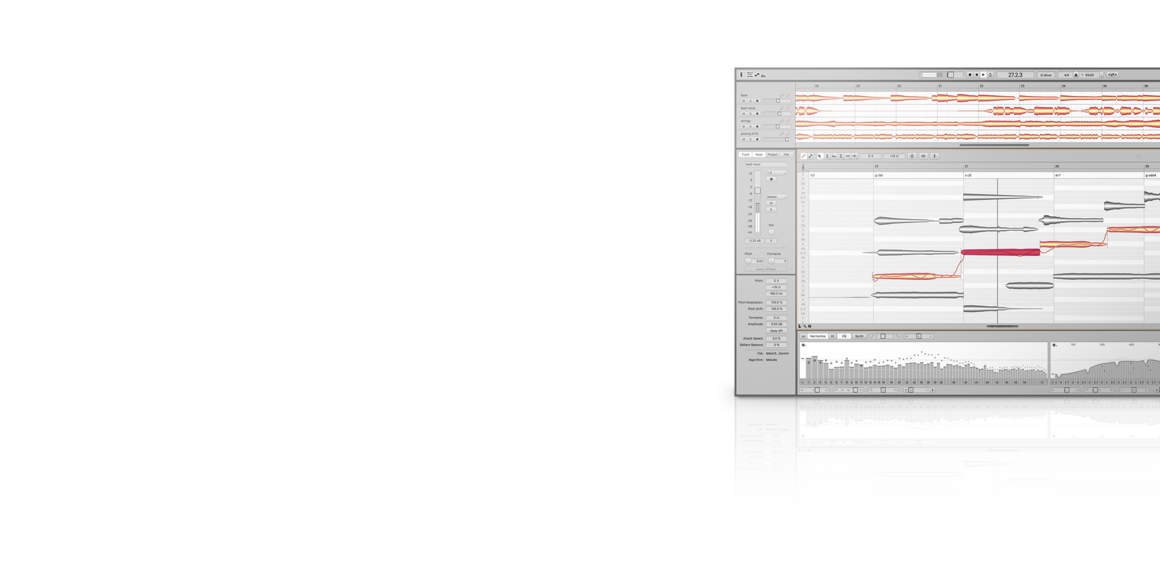 | Melodyne 5 studio How you want to work with audio today. Melodyne 5 studio is the complete Melodyne, with all Melodyne’s unique functions and possibilities. shop.celemony.com |
You also have to make sure your volumes aren't peaking. I like to have between 6-9db (Decibels) of headroom for a nice clean sound. If you don't adjust your levels, the music will sound distorted.
I'll end it there on this section. I could type more about editing and mixing, but I think this gives you the general idea. Just with editing along is a 20-40 hour curve with a 5-10 hour curve for mixing per song.
Total Editing and Mixing Time: 36 hours
3.) Video Editing.
You would think this is self-explanatory; however, it's further from the truth. The bigger the band, the more you will have to edit. I only had seven people complete videos; this saved me a bunch of time. That still doesn't make the work easier; it's laborious no matter what.
Everyone didn't shoot at 1080p; some shot at 720; some filmed at God-only-knows! Just to make sure we're clear, the resolution is basically how many lines are captured on the camera and how it is viewed on the screen. HD video (720 and higher) is about twice the resolution as SD (standard definition, what we grew up watching.) That's why old TV shows can't quite fit on Flatscreen TVs when watching it nowadays. Therefore, some people's video you will have to stretch/alter the video so it can fit the full view of the screen. Now you will have a streamlined video as far as screen space. Lord help us if someone filmed Portrait instead of Landscape (holding the phone upright or the long way, respectively.) Now we will have to wait for them to refilm it. This usually is the biggest blunder.
Now you must line up the videos, do transitions, and tell a story. Oh, don't forget to add your title cards, and everything. All this for a 2:30" video. For your band since it's bigger than my ensemble, you will need almost three times the amount of time I did for a cinematic feel. You could "cascade" the separate videos, but that's a hassle depending on how much power you have and those videos are the least enjoyable. That really should be used for effects. That's why when we watch professional films and television, they switch camera angles. Don't believe me? Watch a show and see how often they change the camera angle per minute. You'll be surprised.
What type of computer do you have? I have to warn people who desire to do video editing. Everyone who has a Mac has iMovie. Problem is, HD video requires a lot of power and memory. Most people don't have sufficient memory and graphic cards to push multilayers of video. If you don't, the computer will sputter and drop frames. What I have found is that school-issued computers can barely handle two layers of videos let alone four! So when you have, or shall I say, when you see a video that has six people playing side by side, you need a computer to handle six separate million-color graphic videos at the same time. Go back to our football analogies. Try placing four offensive lineman in a Honda Civic and you're trying to race another car. Not going to happen. Ever wonder why your phone gets hot while playing certain games or watching movies? Same reason.
https://www.techwalla.com/articles/what-is-video-rendering
I had to buy two 16 gig RAM chips so I can run my iMac at Optimum capacity. MOST computers only come with 4gigs of RAM. My iMac is a 2011. I really need at least a 2013. Even at 32Gigs of RAM, it still stutters. Oh, that was additional $320 for my computer. All this for a 2:30" video.
Total Hours: 12 hours
4.) Mastering
I won't get too much into this, but you need to do it. It makes your music wider. I did a "Cheap" master since I was stuck on time. No matter what, you need to do it to make sure your music is line-level and reaches the widest and fullest bandwidth.
Total Hours: 1-4 hours
Grand Total Time for 2:30 video: Approx. 54 hours.
Perhaps I was loquacious; however, I had to tell you everything so you wouldn't get caught off-guard. Remember, I do this for my church and the process is much longer for all of the aforementioned. Why? I'm dealing with about 10 vocalists and a six-piece rhythm section. A Six-piece rhythm section is about 14 tracks (8 for drums, 2 for piano, and everything else is mono.)
Oh, before I go, I really implore you to have a dedicated workstation for your audio and video. If I remember correctly, your computer was short on RAM. The Macbooks from the last seven years can't get upgraded. The RAM is soldered on the motherboard. You'll need to purchase a new computer. The new Macbooks you will need will cost about $5200. This includes all the cables, adapters, and all the memory (128G) you will need. You won't be able to do all of that on a Chromebook or iPad.
I ALMOST forgot! How big is your hard-drive? You will need a separate hard drive to handle all those videos. Why? If everyone shoots at 1080p (Full HD), that will be about 330MB for a 2:30 min video, or roughly a Gig for 3 videos. You have 60 people? That's 20 Gigs. That's five DVDs of information. All of that memory for a 2:30" video.
So, if you do a concert of 8 songs (and the average concert band compositions/movements are 3 minutes long) it could be anywhere from 200 to 400 Gigs of information. Most computers only come with a 500G hard drive. Now imagine if you do a year's worth of concerts? That's six computers' worth of information.
Love you Frat! Hope that helps. We also haven't talked about microphones and audio interfaces. That adds about another $100 to $1000 worth of equipment. So essentially, to do a video is working another full-time job along with your current teaching job. All this for a 2:30" video.
Musically Yours,
Chad "Sir Wick" Hughes, PhD
Subscribe to:
Posts (Atom)